360° virtual tours have become increasingly popular for showcasing properties and businesses, offering a captivating way for your audience to explore spaces remotely. The time it takes to create your virtual tour can vary significantly based on factors such as the complexity of the location, the quality of the equipment used, and your experience level in photography and editing. On average, you might expect it to take anywhere from a few hours to several days, depending on these variables. Understanding this timeline can help you manage your expectations and prepare effectively.
The concept of 360° virtual tours allows users to immerse themselves in a digital environment, providing a comprehensive view of a location as if they were physically present. This technology is widely used in various industries, including real estate, travel, and education, to enhance the audience's experience and engagement.
After gaining popularity, 360° virtual tours serve to showcase spaces interactively, allowing potential customers or clients to explore properties or venues remotely. This technology not only provides an immersive experience but also aids in decision-making.
Besides expanding your understanding, you can encounter various types of 360° virtual tours, including:
| Interactive Tours | Encourage user navigation. |
| Walkthrough Tours | Guide users through a set path. |
| Self-Guided Tours | Allow users to navigate at their own pace. |
| Video Tours | Combine video content with 360° visuals. |
| Live Tours | Offer real-time exploration with a guide. |
Any type of tour can significantly enhance your presentation and engagement levels.
This variety means you can select the best format for your objectives, leveraging unique features such as:
| Customisation | Tailor to specific audience needs. |
| Analytics | Track user interaction and engagement. |
| Mobile-friendly options | Ensure accessibility on all devices. |
| Integration capabilities | Seamlessly embed on websites. |
| Enhanced visuals | Use high-quality imagery for immersive experiences. |
Any choice you make will ultimately depend on your specific marketing goals and audience preferences.
It is important to consider several factors that influence the time required to create a 360° virtual tour. These include:
Recognising these aspects will help you manage your expectations and streamline the workflow. For more insights, check out these Tips to get started with virtual tours : r/RealEstatePhotography.
For different locations, the complexity can significantly impact the time needed to produce your virtual tour. A straightforward, open space will require less time than a detailed, intricate environment. The more unique angles and features you want to capture, the longer it may take.
Along with the complexity, the technology and equipment you choose play a major role in production time. High-quality cameras and editing software can offer better results but may also require additional expertise.
Another factor to consider is the learning curve associated with your chosen technology. Using state-of-the-art equipment can enhance your final product, but it may initially slow down your process as you become familiar with the functionalities. Furthermore, investing in a 360° camera that is easy to handle can lead to more efficient shoots, whilst more advanced models may demand a deeper understanding of post-production editing techniques. Balancing investment in quality with your current skill level is vital for efficiency.
All virtual tours require a thorough pre-production phase to ensure a smooth operation. You must consider aspects such as location, subject matter, and intended audience. Each decision will guide not only the creative direction but also the logistics involved in capturing high-quality content. Effective organisation during this stage will ultimately save you time and resources throughout the production process.
With a solid plan and storyboard, you set the foundation for your virtual tour. This process involves outlining the key features and narrative you want to convey, ensuring a logical flow that will engage your audience. It is vital to map out each scene and transition, as this will help you stay focused and streamlined as you move into production.
Among the many elements that contribute to the success of your virtual tour, the right equipment setup cannot be overlooked. Ensuring that you have the appropriate cameras, lenses, stabilisation tools, and lighting can make or break your project.
Storyboarding is necessary for focusing your efforts when setting up equipment and capturing footage. Having a clear plan allows you to identify the best angles, lighting conditions, and necessary equipment for each scene. Properly setting up and calibrating your gear is vital, as it ensures that the imagery is of the highest quality, while also preventing potential issues such as blurred images or insufficient coverage. Also, never underestimate the importance of conducting test shots to perfect your setup before finalising the tour. This preparation pays off, allowing for a seamless production experience.
After the planning stage, you enter the production phase, where the actual creation of your 360° virtual tour takes place. This is where you gather all necessary materials, set up your equipment, and start capturing the immersive experiences that will engage your audience. Organisation and attention to detail in this phase are vital for achieving quality results.
Above all, capturing the imagery is a foundational step for your virtual tour. Using high-quality cameras and lenses will ensure that the resulting images are sharp and vibrant. Pay attention to lighting conditions, as they play a significant role in the overall look and feel of the tour.
An effective technique for optimal results involves careful consideration of your camera settings and shooting angles. Ensure that you capture images with consistent exposure and focus across all viewpoints to create a seamless experience for viewers.
Plus, using the right techniques can vastly improve the quality of your virtual tour. Employ tripods and stabilisation equipment to reduce any unintended movement during capture. Consider conducting test shots to assess lighting and composition, allowing you to make adjustments before the final recording. Finally, aim for consistent texture and colour in your images, so viewers experience a smooth transition throughout the tour, enhancing the immersive feel of your project.
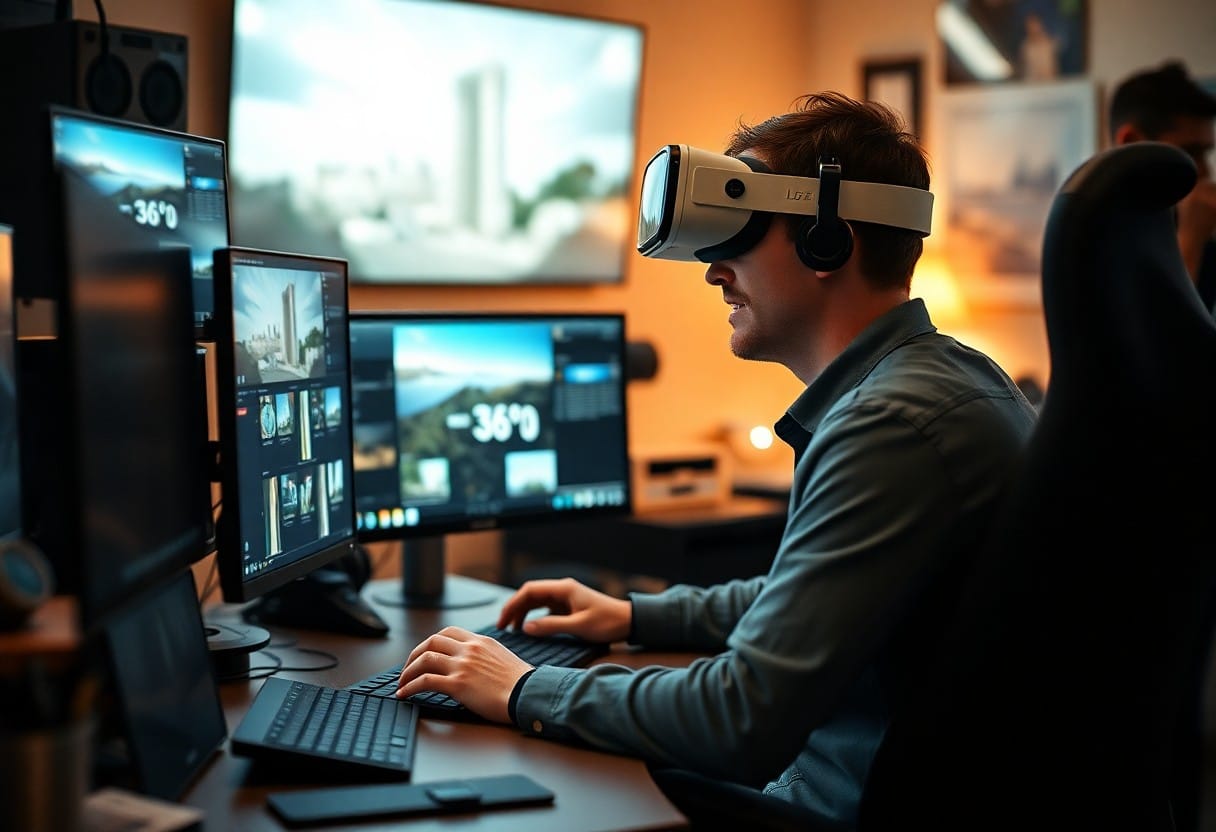
Not only does post-production play a vital role in refining your 360° virtual tour, but it also significantly contributes to the overall quality and user experience. This phase includes editing, stitching images, and integrating interactive elements, all of which work together to create a seamless and engaging journey for your viewer.
Along the way, you will need to edit and stitch your images to ensure a smooth transition between different viewpoints. This process involves using specialised software to combine multiple images into a cohesive 360° panorama. It’s vital to pay attention to detail, as discrepancies in lighting or stitching lines can detract from the immersive experience.
A vital component of creating an engaging virtual tour is integrating interactive elements. These features enable viewers to explore the space actively, which keeps their interest and enhances their experience.
The inclusion of interactive elements, such as clickable hotspots, informative pop-ups, and navigational tools, can significantly enrich your virtual tour. You have the opportunity to showcase vital information about specific areas, highlight unique features, or guide viewers through the space in a linear fashion. While these elements add depth, it's important to maintain a balance so that they do not overwhelm the viewer, ensuring that your virtual tour remains an enjoyable and informative experience.
To estimate the average time required for creating a 360° virtual tour, you might consider several factors, including the number of locations and the complexity of the scenes. Typically, a basic tour can take around 2-4 weeks, while more expansive and intricate projects may require upwards of 8-12 weeks. Factors influencing this timeline include planning, shooting, and post-production processes, which all play a significant role in delivering a polished final product.
Complex tours often demand extensive detail and multiple locations, extending the production timeline significantly. Simple tours, on the other hand, may require less time due to fewer scenes and simpler editing processes. This distinction can greatly impact your planning and budgeting for a virtual tour project.
Behind the creation of effective 360° tours are several illustrative case studies that demonstrate varying timelines and outcomes in different scenarios:
At each phase of these projects, you can see variations in time based on the complexity of content, the number of locations involved, and the level of detail required. These real-life examples can provide insights into how you might plan your own project, maximising efficiency while ensuring the quality of the final product is not compromised.
On the whole, the creation of a 360° virtual tour can take anywhere from a few hours to several days, depending on various factors such as the size and complexity of the location, the quality of equipment used, and your familiarity with the software. If you have a well-planned approach and utilise efficient techniques, you can minimise the time involved while ensuring a high-quality result. As you begin this project, consider your requirements and allocate sufficient time to achieve the immersive experience you desire.
A: The duration to create a 360° virtual tour can vary based on several factors, such as the size and complexity of the space, the level of detail required, and the technology used. On average, it may take anywhere from a few days to several weeks. For smaller spaces, a simple tour might be completed in just a couple of days, while larger or more intricate locations could take several weeks to properly capture and edit.
A: Various elements can affect the time frame, including the number of locations or rooms to be captured, the quality of the equipment being used, and the amount of post-production work required. Additionally, if there are specific features such as interactive elements, virtual reality compatibility, or custom branding that need to be integrated, these can extend the production time significantly.
A: Generally, the time frame can differ for indoor and outdoor tours. Indoor spaces often have controlled lighting and fewer variables, allowing for quicker setups and capturing processes. Outdoor tours, on the other hand, may require consideration of changing weather conditions, natural lighting variabilities, and the need for permissions in public spaces, which can lead to longer production times. Overall, both types of tours have unique challenges that can influence their creation timeline.