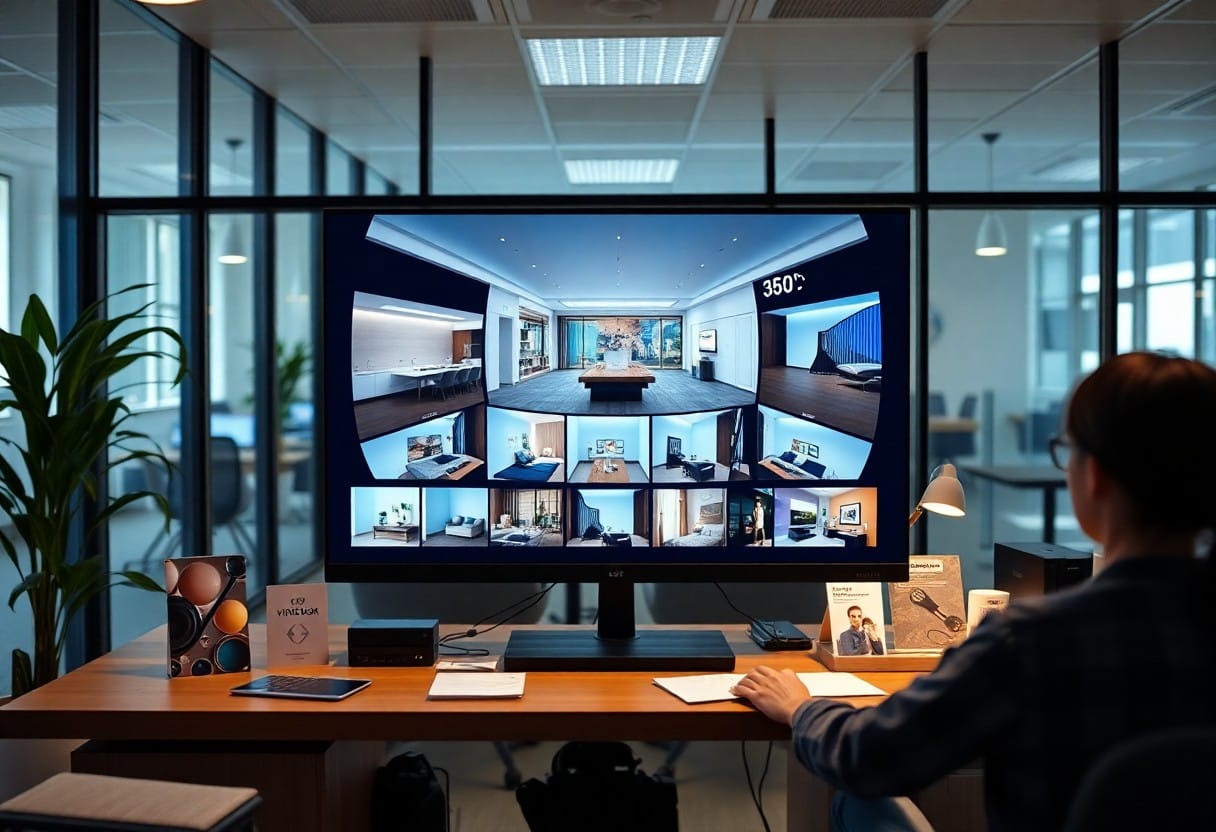
Tours that immerse your audience in realistic experiences are revolutionising the way businesses market themselves. By offering interactive insights into your products or services, 360° virtual tours can significantly enhance customer engagement. You have the opportunity to make a lasting impression while showcasing your unique offerings. However, it’s crucial to note that poorly executed tours may lead to confusion or misrepresentation of your brand. Understanding the impact of these tours on consumer behaviour will help you leverage this technology effectively and elevate your marketing strategy.
While the digital landscape continues to evolve, 360° virtual tours offer an immersive experience that can significantly enhance marketing strategies. By allowing users to explore spaces virtually, these tours create a sense of presence, engaging potential customers more effectively than static photos or videos. As a versatile tool, they cater to various industries, from real estate to tourism, providing an innovative way to showcase products and services.
Besides their immersive nature, 360° virtual tours are characterised by their interactive elements, allowing users to navigate spaces at their own pace. Key features include clickable hotspots that provide additional information, high-resolution imagery for detailed views, and the ability to integrate multimedia content, such as videos and sound. These attributes collectively enhance user engagement and offer a realistic representation of the environment.
Indeed, various types of virtual tours exist, each designed to meet specific marketing needs. Below is a breakdown of some common types:
| Type | Description |
| 360° Image Tours | Static images are stitched together for navigation. |
| Video Tours | Pre-recorded walkthroughs to showcase spaces dynamically. |
| Interactive Tours | Custom tours with clickable elements and information points. |
| Live Virtual Tours | Real-time guided tours using live streaming. |
| Software-Based Tours | Utilise proprietary software for enhanced features. |
Recognising the various types helps you choose the most suitable approach for your marketing strategy.
Indeed, understanding the types of virtual tours available can significantly elevate your marketing efforts. Each tour type brings unique benefits, allowing you to tailor your approach effectively. Below is further insight into these types:
| Type | Advantages |
| 360° Image Tours | Cost-effective and easy to implement. |
| Video Tours | Captivating storytelling through a visual medium. |
| Interactive Tours | High engagement and informative experience. |
| Live Virtual Tours | Real-time connection with potential customers. |
| Software-Based Tours | Scalability and customisation options are available. |
Recognising the strengths of each type empowers you to leverage virtual tours effectively in your marketing strategy.
It is no surprise that 360° virtual tours have emerged as a transformative tool in marketing, enabling businesses to showcase their offerings in a captivating manner. These interactive experiences allow potential customers to explore your space at their own pace, effectively bridging the gap between physical and digital interactions. By providing an immersive glimpse into your products or services, you enhance your marketing strategy and stand out in a competitive landscape.
Below, you will discover how 360° virtual tours significantly enhance customer engagement. By enabling users to interact with your environment, you create a sense of involvement that traditional images and videos simply cannot match. This heightened interactivity fosters a deeper emotional connection, making customers more likely to consider your offerings seriously.
The benefits of deploying 360° virtual tours also extend to increased brand awareness. With your business now easily accessible via these immersive experiences, you attract a wider audience, driving traffic to your website and social media channels.
Due to the visually appealing nature of 360° virtual tours, your brand becomes more memorable, facilitating word-of-mouth marketing. As users share their experiences, your reach expands beyond the initial audience, exposing potential customers to your brand in a way that resonates. This form of marketing not only enhances visibility but also positions your brand as forward-thinking and innovative, qualities that actively engage consumers and improve their perception of your business.
All evidence points to the effectiveness of 360° virtual tours in various industries. Here are some notable case studies showcasing significant success:
Estate agents incorporating 360° virtual tours have seen significant improvements in client interest and sales conversions. A property that showcased a virtual tour sold 50% faster than those with traditional methods, highlighting the tour's ability to engage potential buyers.
Hospitality businesses that embraced virtual tours have experienced remarkable outcomes. Hotels that provided 360° experiences not only enhanced the customer journey but also increased direct bookings. This immersive approach allows potential guests to explore rooms, amenities, and surroundings from the comfort of their homes, enticing them to choose your establishment over competitors.
Hence, the importance of creating immersive experiences in the hospitality sector cannot be overlooked. A hotel that implemented virtual tours reported a 15% increase in customer satisfaction, resulting in higher retention rates. Moreover, by providing a detailed view of facilities, you significantly reduce the likelihood of negative reviews stemming from unmet expectations. In an increasingly competitive market, utilising virtual tours can be a game-changer for your establishment.
Once again, while 360° virtual tours offer an immersive experience, they also come with their own challenges and limitations. Issues such as user accessibility, possible technical malfunctions, and the necessity for high-quality visuals can impact their overall effectiveness. Furthermore, not every customer may be comfortable navigating virtual tours. To explore more about the context of these challenges, check out Real Estate Marketing: 9 Benefits of Using 360 Virtual Tours.
Behind the scenes, the effectiveness of a 360° virtual tour relies heavily on technology resources. Users must have a stable internet connection and compatible devices to experience the tour fully. This can limit accessibility for some potential clients, impacting your reach.
At times, investing in 360° virtual tours can seem daunting due to the associated costs. These can include equipment purchases, editing software, and possibly hiring professional photographers or developers. However, it is necessary to weigh these costs against the potential return on investment.
Plus, while initial investment may seem high, the long-term benefits of engaging customers and showcasing your properties can often outweigh these expenses. Ignoring the importance of a solid marketing strategy that incorporates virtual tours may prove to be a dangerous oversight, as it could limit your visibility in a competitive market. Ultimately, every penny spent should be viewed as a step towards improving your marketing potential and enhancing customer engagement.
Your success with 360° virtual tours relies on meticulous implementation. Start by ensuring the technology you choose is user-friendly and compatible with various devices. Pay attention to the user experience; intuitive navigation will keep potential customers engaged. Finally, always monitor the impact of your virtual tours and gather feedback to make necessary adjustments, ensuring they continually serve your marketing goals.
Tours must be visually captivating and technically sound to stand out in today’s market. Use high-resolution images and professional editing to enhance the overall appeal. Ensure that your virtual tour is well-lit, showing all the key features of your space. Narration or informative text can also enrich the experience, making it more engaging for your audience.
Across various channels, it is important to blend 360° virtual tours seamlessly into your overall marketing strategies. This integration allows for a cohesive brand message and maximises visibility across platforms.
Strategies should include leveraging social media to promote your tours, inserting links on your website, and utilising email marketing to drive traffic to these engaging experiences. By incorporating SEO best practices, you can enhance your tours' visibility. Don't overlook the power of collaboration with influencers to widen your reach. Ensuring a consistent message across your marketing efforts while showcasing the immersive nature of your tours can lead to increased engagement and conversion rates.
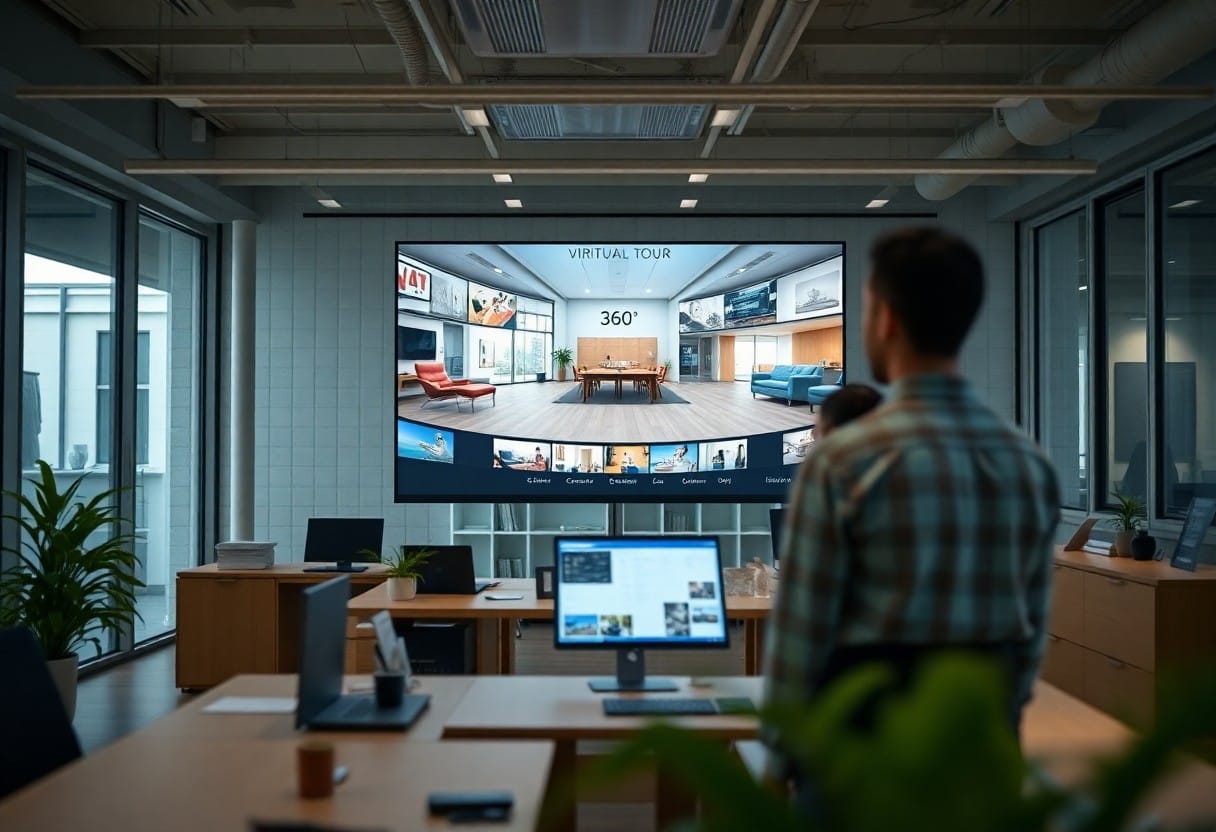
Not only are 360° virtual tours becoming increasingly popular, but they are also evolving to meet the changing needs of marketers and consumers alike. As technology advances and user expectations shift, you will find that these immersive experiences will play an even more significant role in your marketing strategies. The future is bright for this medium, with innovations set to emerge shortly.
Against the backdrop of rapid technological progress, 360° virtual tours are being enhanced by sophisticated tools and platforms. Innovations such as improved VR headsets, artificial intelligence, and augmented reality integrations are paving the way for even more immersive experiences. This evolution allows you to create engaging and interactive content that captures your audience's attention effectively.
Below the surface, consumer expectations are changing dramatically as they embrace digital experiences. Today's customers desire instant gratification, seeking out visually appealing and engaging content that enhances their decision-making process. You must adapt your strategies to meet these heightened expectations, as customers increasingly favour brands that utilise innovative solutions like 360° virtual tours.
Even in a rapidly changing market, your ability to address evolving consumer preferences is vital for maintaining a competitive edge. As customers demand high-quality visuals and immersive interactions, integrating 360° virtual tours into your marketing approach can offer unique opportunities to engage your audience. Staying attuned to these shifts not only enhances your brand image but also positions your offerings in line with consumer desires, ensuring you stay relevant and captivating to potential customers.
Ultimately, 360° virtual tours can significantly enhance your marketing strategy by offering an immersive experience that engages potential customers. They allow you to showcase your products or services dynamically, helping to build trust and excitement. By enabling prospective clients to explore your space virtually, you increase the likelihood of conversions and foster stronger connections with your audience. Incorporating such technology into your marketing efforts ensures you stay competitive and relevant in an increasingly digital landscape.
A: 360° virtual tours significantly enhance customer engagement by allowing potential clients to interact with a space in a unique and immersive way. Unlike traditional images or videos, these tours provide a comprehensive view, enabling users to explore details at their own pace. This level of interactivity increases the time spent on the website and generates a more personalised experience, which can significantly boost a customer's emotional connection to the brand or space being marketed.
A: Several industries can greatly benefit from the use of 360° virtual tours, including real estate, hospitality, education, and retail. In real estate, virtual tours help showcase properties, allowing prospective buyers to visualise themselves in the space without physically visiting. In hospitality, hotels and resorts can attract guests by allowing them to explore the amenities and rooms. Educational institutions can showcase facilities to potential students, while retailers can create an engaging shopping experience that encourages online purchases.
A: Yes, 360° virtual tours can positively impact conversion rates by providing prospective customers with a richer understanding of the product or service on offer. By allowing potential clients to virtually interact with a product or experience, they are more likely to feel confident in their purchasing decisions. Statistics have shown that businesses incorporating virtual tours often see an increase in conversion rates, as this form of visual marketing tends to inspire greater trust and interest from potential buyers.